16-week marathon training plan: explained by a coach
EMQ head coach walks you through every phase of a complete 16-week marathon training block — including base building, taper and race-week preparation.

.png)
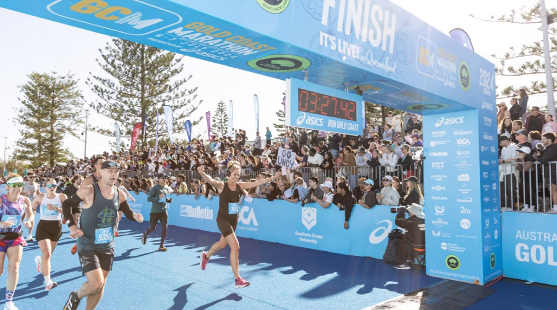
'The biggest nutrition mistake I see at the Gold Coast Marathon is athletes eating a larger than usual dinner the night before and arriving at the start line with gastrointestinal issues by kilometre five.'
— Dr Megan Hoult, Accredited Sports Dietitian
For events lasting longer than 90 minutes — which covers the full and half marathon at most paces — targeted carbohydrate loading in the 36–48 hours before race start can meaningfully increase glycogen stores. The target is approximately 10–12 grams of carbohydrate per kilogram of body weight per day during this window, distributed across multiple meals and snacks rather than concentrated in a single large meal.
Practical food sources that work well for this phase include white rice, pasta, bread, bananas, sports drinks and low-fibre breakfast cereals — familiar, easily digested foods that don't carry a high risk of gastrointestinal distress on race morning.
Carbs per kg body weight per day (loading phase)
Carbs per hour recommended during the race
Water per hour as a starting hydration baseline
The race-morning meal should be consumed three to four hours before the start gun for events with a large field and staggered start times. This gives adequate time for gastric emptying and prevents the discomfort of running on a full stomach. A typical meal might include white toast with honey or jam, a banana, a sports drink and a small coffee for athletes who are habitual coffee drinkers.
Athletes who struggle with early-morning appetite — common at major events where start times can be as early as 5:30am — can supplement with liquid carbohydrates such as sports drinks, gels diluted in water, or commercial liquid meal replacements designed for pre-exercise use.
.png?width=1760&height=990&name=Container%20(1).png)
Race-day nutrition doesn't need to be complicated. The fundamentals — adequate carbohydrate in the lead-up, a familiar race-morning meal, consistent fuelling during the race, and good hydration throughout — will serve the vast majority of Queensland endurance athletes well. Save the experimentation for training, and trust the protocol you've rehearsed on race day.
EMQ head coach walks you through every phase of a complete 16-week marathon training block — including base building, taper and race-week preparation.
We spoke with the performance nutritionists behind three of Queensland's top endurance athletes — a sub-2:30 marathoner, an Ironman podium finisher and a Pan Pacific Masters Games...

Nature is an interconnected web of living and non-living elements that sustains life on Earth. It encompasses everything from the microscopic soil biodiversity beneath our feet to...